I’ve been looking into creating a phone app using Flutter. Like any good developer, I looked for a reproducible environment, and Docker seemed like a reasonable place to find inspiration.
I noticed that Qwen 3.8 was described using the following:
… a native vision-language model that understands images and videos …
and wondered why llama.cpp wouldn’t allow me to add images to the chat context (while allowing text and PDF files), and why Open WebUI would give me the following (non-obvious) error:
image input is not supported - hint: if this is unexpected, you may need to provide the mmproj
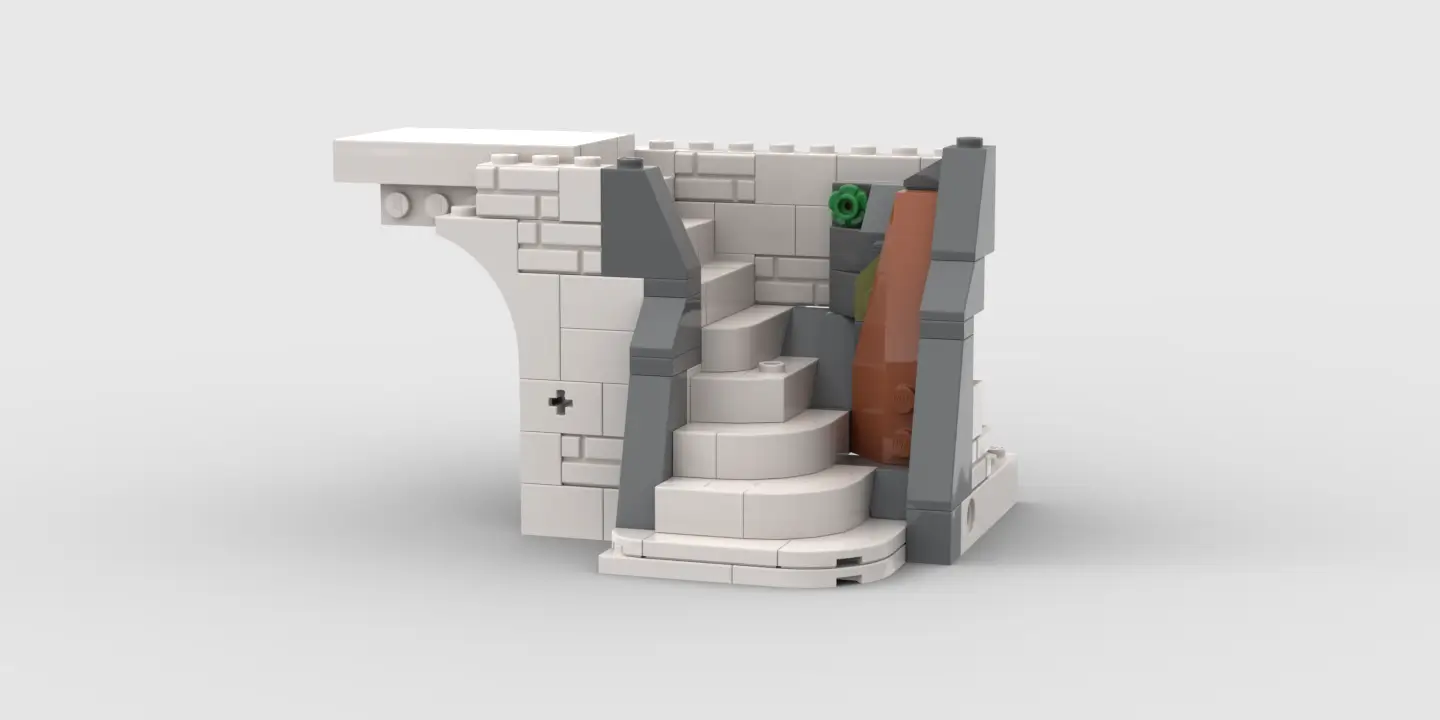
Having a beautiful staircase leading up to a platform and raised garden requires an equally beautiful railing to prevent minifigures from falling and hitting their heads. 🤕
The following post showcases the different prototypes and iterations I explored while looking for the best fence/railing for my ambitious MOC LEGO project.
A little over a year ago I set up a local LLM with the expectation that I would use it for all kinds of cool things. So far, it has just replaced the need for ChatGPT (chat) and Grammarly, which is a little disappointing. To be honest, I didn’t really have the mental bandwidth to learn more about the world of LLMs and improve the setup. And the few times I set about diving in, a fear that my consumer hardware (Nvidia RTX 3090 - 24Gb VRAM) was too weak for the models to deliver any useful results discouraged me from persisting.
But this time around, I think things are about to take a turn for the better.
I recently reawakened my interest in LEGO after months of not feeling the draw. The fact that sunlight discolors bricks over time, combined with the space they take up, had put a damper on my enthusiasm. But lately things have changed…
I’ve been contracting in the public sector for several years now, and seeing how time and resources (money) are sometimes spent can make me queasy. The public sector seems immune to approaching problems with a long-term solution, no matter how brain-dead-obvious (I think) it is.
Since I work with loads of clever people, it must be the incentive structures that cause decision-makers to prioritize short-term wins over long-term sustainability… again and again and again.
I’ve been pondering how to approach the problem, and I’ve had this idea materializing for some time now. It won’t fix everything, far from it, but it doesn’t have to either. It just needs to pull in the right direction.
Even the fastest web servers become bottlenecks when handling CPU-intensive API work. Slow response times can cripple your service, especially when paired with an API gateway that times out after 29 seconds.
I solved this using a simple middleware that eliminated 504 - Gateway Timeout responses and significantly reduced unnecessary load on my service API.
AI tries to make everything easy… convenient, but life without discomfort is not something to desire. The label ‘PC compatible’ is a reminder of how complex (inconvenient) things can be.
The other day, I was taken back to the “good old days”, and not in a good way. I had assumed that a major hardware provider like Samsung nowadays would ensure a decent user experience during firmware updates, regardless of the operating system. But I was in for a disappointment.
My home server running Linux has been crashing occasionally for a while. But since a reboot would temporarily “fix” it, sometimes for weeks, I never prioritized finding the underlying problem… until now. It feels like a recent kernel update now triggers the crash more often, but I have no data to back this statement up.
The posts touch a lot of different topics in no particular order. It might be more convenient to browse by tags if you have a topic of specific interest.